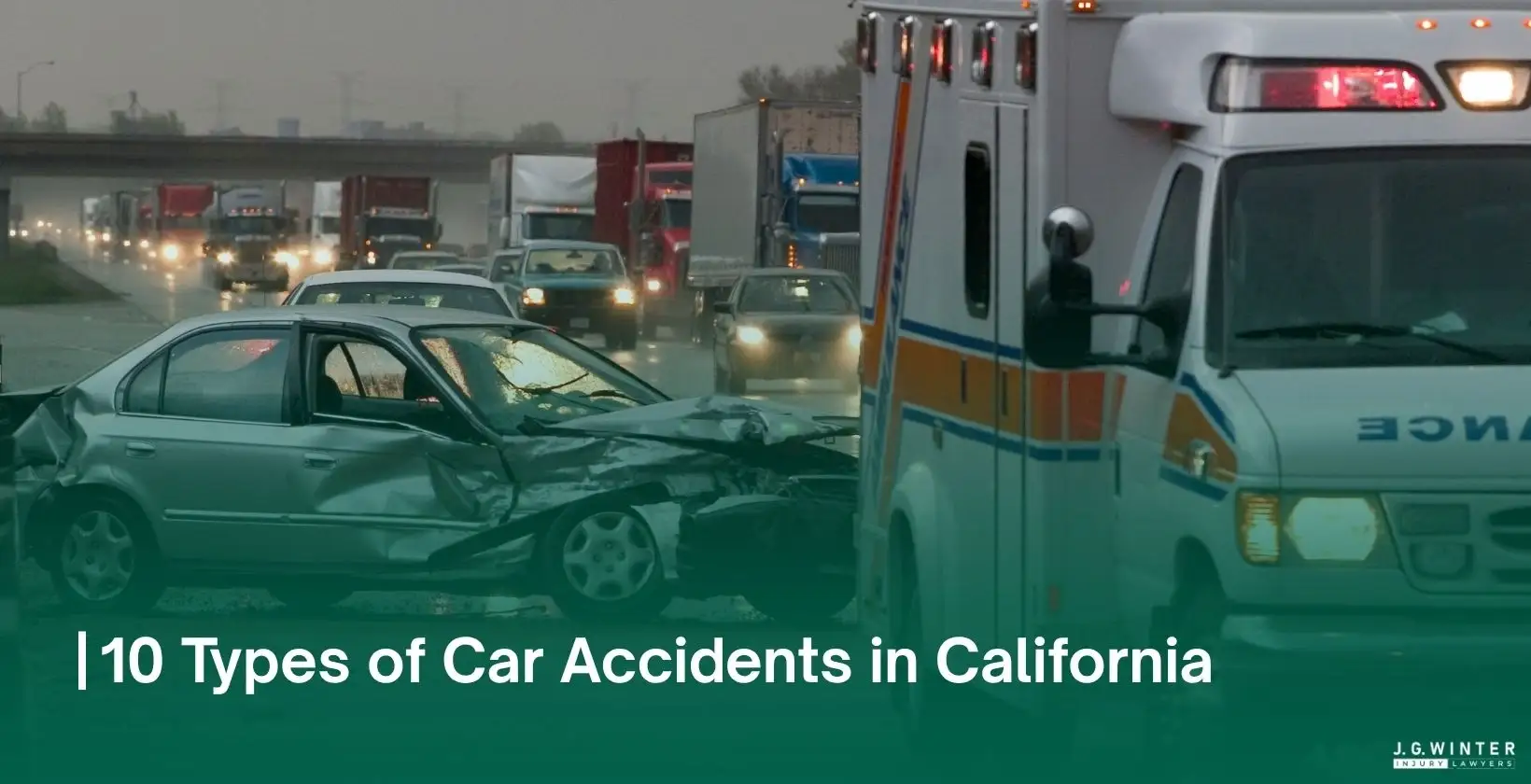
Every traffic collision is unique, but your legal path to financial recovery often depends on the specific mechanics of the crash. The way your vehicle was hit shapes who is at fault, what evidence matters most, and the ultimate settlement value of your personal injury claim.
California recorded 4,061 traffic fatalities in 2023, second in the nation, according to the California Office of Traffic Safety, and Sacramento corridors like Interstate 5, Highway 99, and Business 80 remain among the most crash-involved roadways in the region. Rear-end collisions account for nearly one-third of all reported crashes statewide, while head-on, T-bone, and rollover crashes cause a disproportionate share of fatalities and catastrophic injuries. Knowing what type of accident you were in is the first step toward protecting your claim.
This guide breaks down the 10 most common types of car accidents in California, the injuries each one causes, and what to do next. It comes from Jeremy Winter, an attorney who has represented car crash victims as a Sacramento car accident lawyer for nearly 20 years.
Key Takeaways
- Common car accident types on Sacramento roads include rear-end collisions, T-bone (side-impact) crashes, head-on collisions, sideswipes, rollovers, parking lot collisions, and single-vehicle accidents, many of which occur at busy intersections, parking lots, or high-speed corridors.
- These crashes often result from distracted driving, speeding, unsafe left turns, failure to yield, or poor road conditions, especially during rush hour or at night.
- Typical injuries range from whiplash and soft-tissue damage to traumatic brain injury (TBI), broken bones, spinal cord injuries, and internal trauma.
- If you’re involved in any of these accident types, seek medical attention immediately, document evidence, and contact a car accident lawyer near you.
1. Rear-End Collisions
A rear-end collision is one of the most common types of car accidents. This type of accident happens when a car hits another from behind. The most common cause of this accident is a lack of attention on the road and the driver following another vehicle too closely.
When a driver lacks sufficient space between their car and another in front of them, the driver behind them may lack time and space to stop the vehicle, causing the accident. Typical injuries include whiplash, herniated discs, and concussion. In California, the rear driver is presumed at fault unless evidence shows the front driver acted negligently.
California Vehicle Code Section 21703 makes tailgating itself a violation: a driver may not follow another vehicle “more closely than is reasonable and prudent” for the speed of traffic and the condition of the road. This statute is why the rear driver starts most claims presumed at fault. Proving the violation, through dashcam footage, skid mark analysis, or witness statements, strengthens an injury claim well beyond the presumption alone.

2. Head-On Collisions
According to the Insurance Information Institute’s 2023 highway safety data, head-on collisions account for 11.2 percent of all fatal crashes in the United States, disproportionately high given how rarely they occur compared to other crash types. Two vehicles traveling in opposite directions collide head-on when they meet with direct frontal impact. The impact force multiplies because both cars are heading toward each other.
Crashes where vehicles hit each other directly are more likely to result in severe injuries or even fatalities compared to other types of accidents. The most common cause of a head-on collision is high speed and DUI (Driving Under the Influence). These crashes frequently result in traumatic brain injury, chest trauma, and fatalities. The driver who crossed into oncoming traffic is typically liable under California Vehicle Code § 21650, which requires driving on the right half of the roadway; on divided highways and wrong-way freeway entries, § 21651 applies instead.
Three more statutes decide many head-on liability disputes. Vehicle Code Section 21460 prohibits crossing solid double lines. Section 21750 requires a passing driver to overtake at a safe distance and return to the lane only when clear. And when alcohol is involved, Section 23152(a) adds a DUI violation that supports negligence per se and, in egregious cases, punitive damages. Wrong-way entries onto one-way streets and freeway ramps remain the most common trigger in Sacramento.
3. T-Bone Collisions
A T-bone accident is also called a side-impact accident. T-bone crashes occur when a vehicle is struck directly on its side at a 90-degree angle. These accidents often take place at intersections and parking lots. T-bone accidents are very risky for the people inside the vehicle that gets hit on the side, because the sides of cars have less material to absorb the impact in a crash than the front and back.
The most common causes of T-bone accidents are violations of traffic rules, drunk driving, and failing to yield to an oncoming vehicle. Occupants on the struck side face the highest injury risk: broken ribs, pelvic fractures, and head trauma are common. Fault typically turns on right-of-way violations at the intersection.
Two right-of-way statutes control fault in most T-bone cases. Vehicle Code Section 21801(a) requires a left-turning driver to yield to all oncoming traffic close enough to be a hazard, and to keep yielding until the turn can be made safely. Vehicle Code Section 21453 requires a full stop at a red light. A violation of either, documented in the police report or by intersection cameras, usually settles the liability question.
Injured in a rear-end, head-on, or sideswipe crash in Sacramento? Call us at (844) 734-2626 or fill out our online free consultation form.
4. Sideswipe Accidents
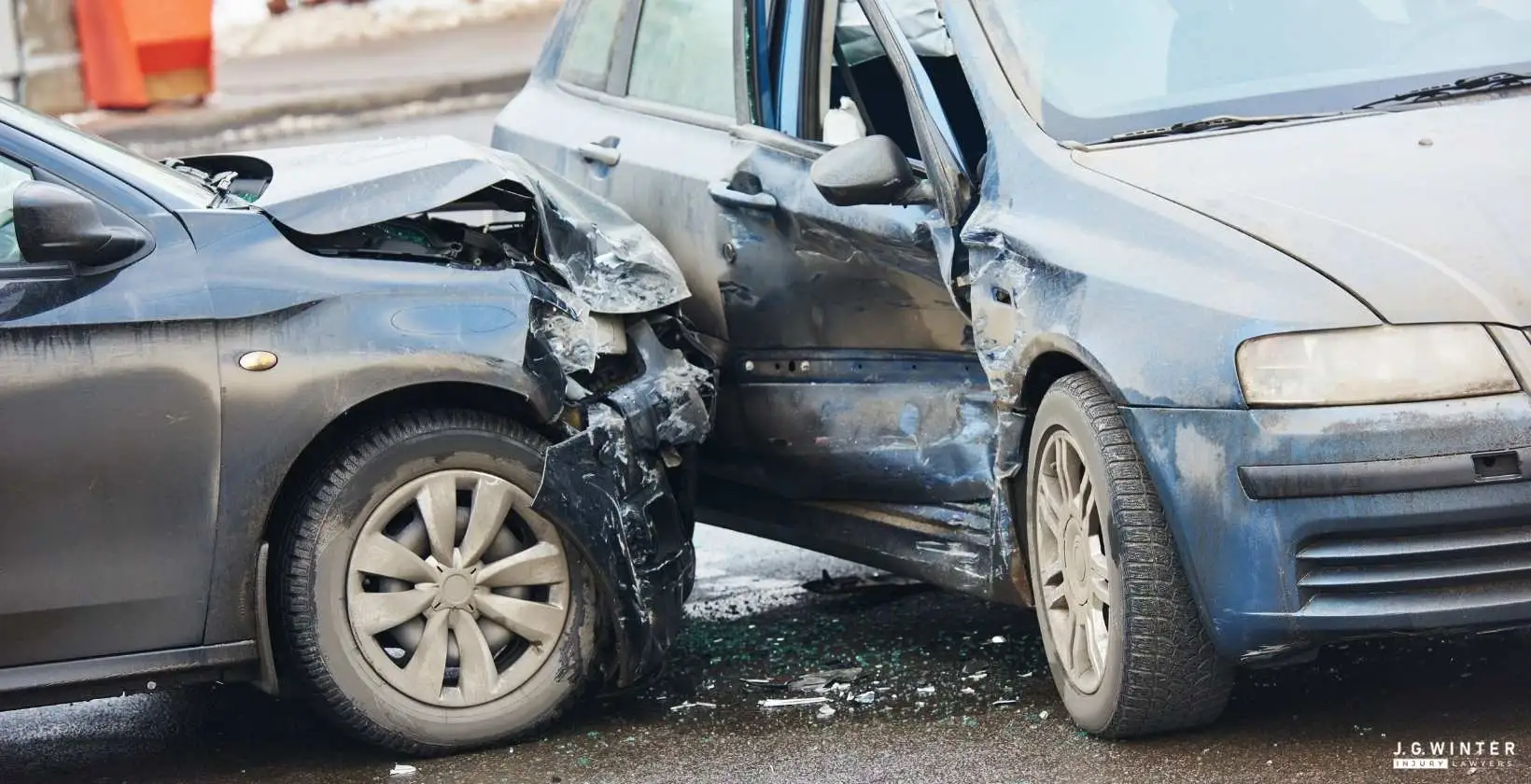
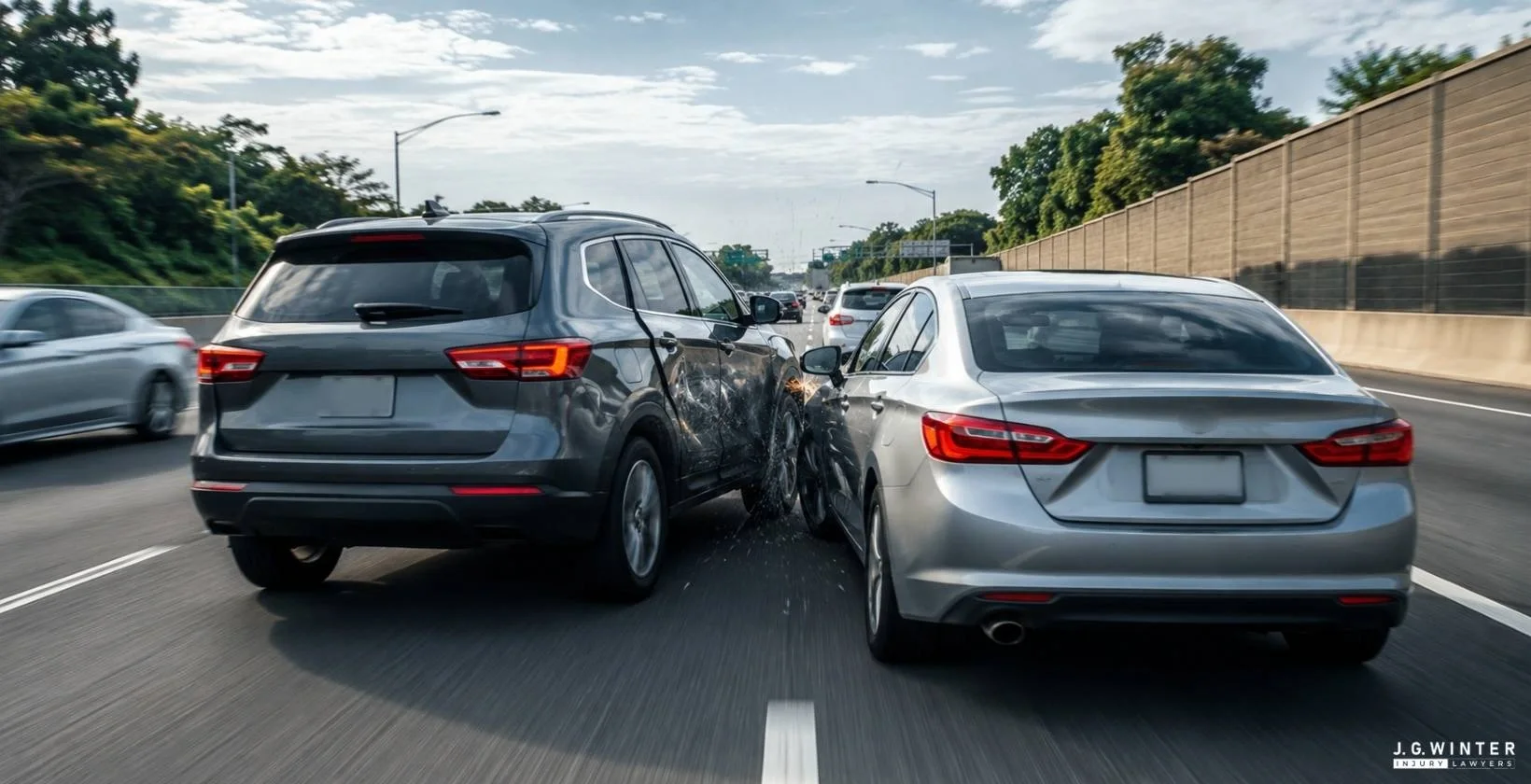
A sideswipe accident happens when two or more vehicles move in parallel, and one vehicle hits the side of the other vehicle. This is dangerous because the initial impact causes one or both cars to lose control and swerve off the road. The most common cause of a sideswipe accident is the driver failing to check the blind spot and changing lanes without checking the mirror.
Injuries range from shoulder and arm damage at low speeds to spinal injuries if the vehicle spins into a barrier. The lane-changing driver is generally liable under California Vehicle Code § 21658.
NHTSA crash studies attribute several hundred thousand U.S. crashes each year to lane changes and merges. Beyond the blind-spot rule in Section 21658, two statutes govern the maneuver: Vehicle Code Section 22107 prohibits moving right or left until it can be done with reasonable safety, and only after signaling, while Section 22108 requires that signal to run continuously for the last 100 feet before turning. A missing signal, confirmed by a witness or camera, is often the single fact that moves a sideswipe claim from disputed to accepted.
5. Roll-Over Accidents
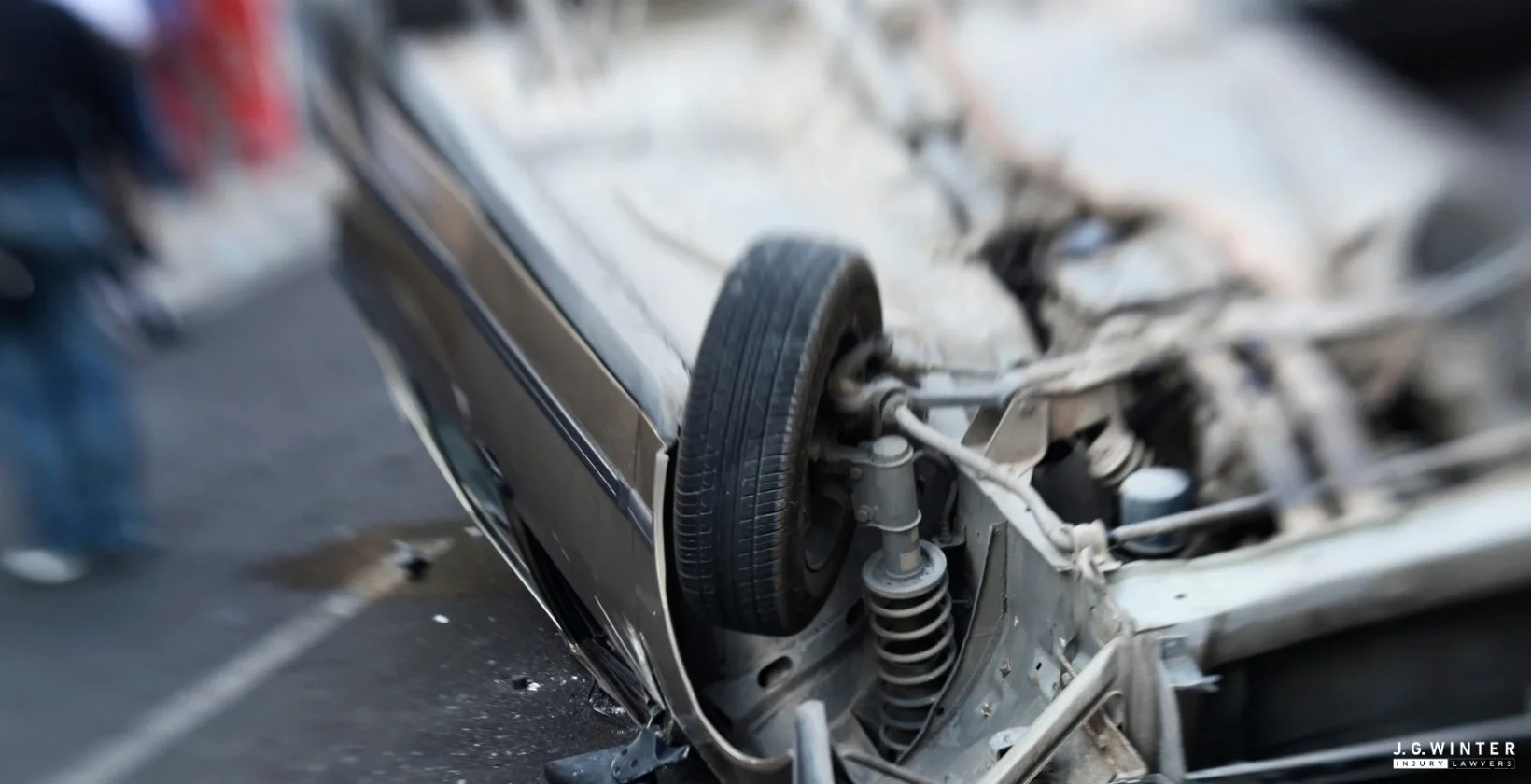
When one vehicle tips over onto its side or roof, a rollover accident occurs. Rollover accidents carry a high fatality risk, and a vehicle involved in a rollover can result in fires caused by spilled fuel or cargo. The most common causes are speeding, drunk driving, lack of attention, and driving off the road’s shoulder. Tall and narrow vehicles are more likely to be involved.
In these devastating situations, a Sacramento car wreck lawyer is essential for conducting a thorough investigation and holding the responsible parties accountable. Spinal cord injuries, ejection, and roof crush injuries are common outcomes. Beyond driver error, vehicle design defects can create manufacturer liability under California product liability law.
6. Single-Vehicle Accidents
A single-vehicle accident happens when something makes a car go off the road and hit things like lampposts, guardrails, or other objects. The most common causes are hitting animals, losing cargo, or running into something on the road, like pieces from a truck’s tire. The car might flip or end up in a ditch, depending on where it happens.
Even if there’s only one car in the accident, the injuries can be severe if it crashes into something big or heavy or rolls over. Injuries vary widely depending on impact speed and the object struck. Third parties, including road agencies or parts manufacturers, may share liability if a road defect or vehicle malfunction contributed.
A single-vehicle crash is not automatically the driver’s fault. Under California’s pure comparative negligence rule, liability can shift, in whole or in part, to a phantom driver who forced the vehicle off the road without contact, a manufacturer whose tire or brakes failed, Caltrans or the City of Sacramento for unrepaired road hazards, or a property owner whose condition created the danger. Preserving the vehicle and photographing the road before repairs is what keeps these theories provable.
7. Multi-Car Accidents
A multi-vehicle accident, or pileup, involves three or more vehicles in a single collision event. This type of accident mostly happens on the freeway, where high-speed traffic movement makes it difficult to avoid. The involvement of multiple cars increases the chances of injuries.
The most common cause of multi-vehicle accidents is chain reaction rear-end accidents. Multiple impact directions mean compound injuries are common. California’s comparative negligence rules distribute fault across all responsible parties.
8. Intersection Accidents
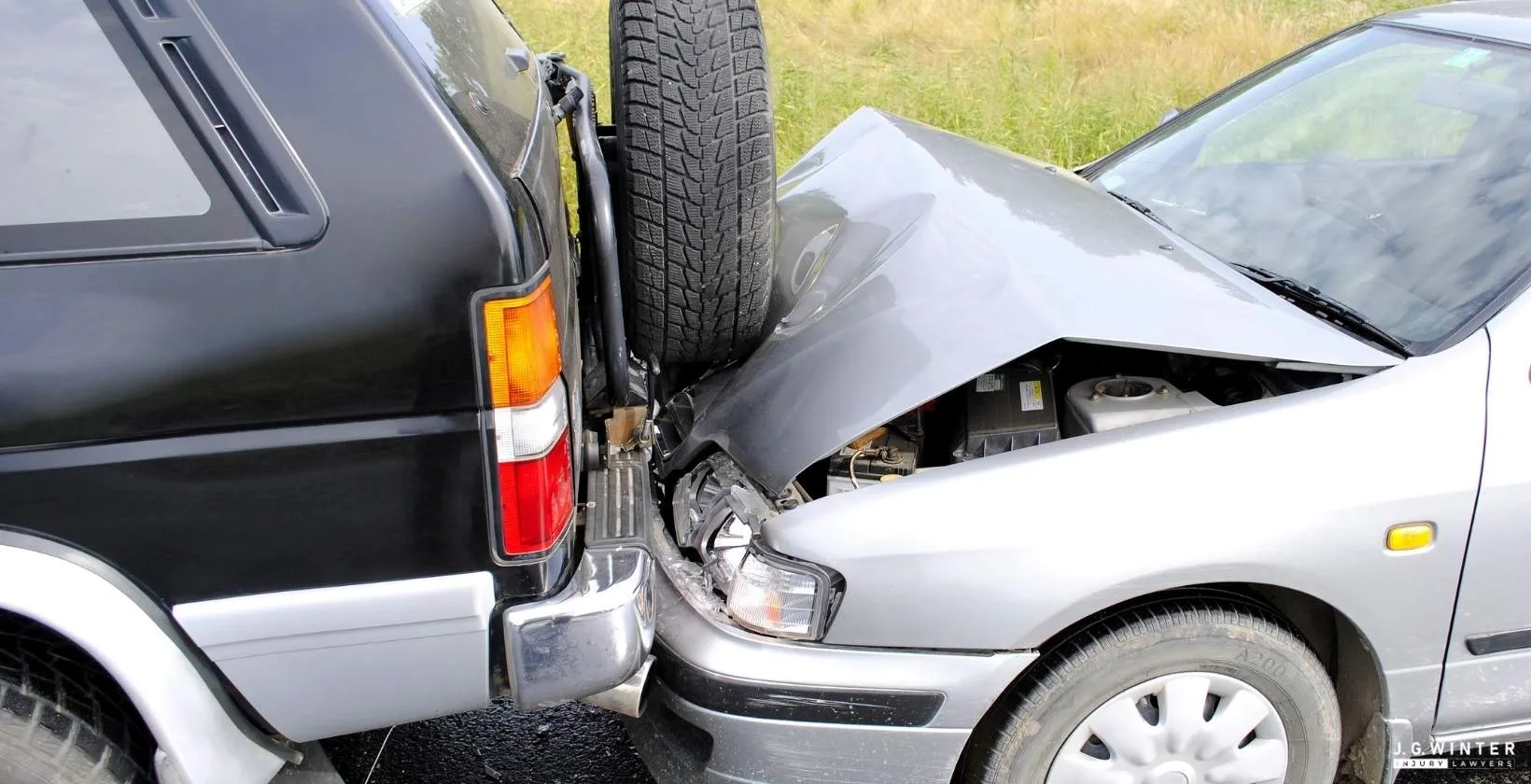
According to the Federal Highway Administration report, roughly 2.5 million intersection accidents happen yearly. An intersection collision occurs when one vehicle acts carelessly or recklessly, negligently violating laws, and collides with another vehicle. The common causes are distracted driving, failing to yield the right of way when making turns, driving under the influence, and unfamiliarity with the area. Injury severity depends on speed and angle of impact.
Some Sacramento intersections produce recurring crash patterns:
- Folsom Blvd & Howe Ave: rear-end and sideswipe collisions
- 12th St & B St: T-bone crashes
- Elder Creek Rd & Stockton Blvd: left-turn collisions
- Franklin Blvd & Mack Rd: pedestrian incidents
- Mack Rd & Valley High Dr: turning movement accidents
If you were hurt at any of these locations, act quickly: traffic camera and surveillance footage is often deleted or overwritten within days, and it is frequently the strongest evidence of a red light or failure-to-yield violation.
9. Blind Spot Accidents
A blind spot accident happens when a driver neglects to check the blind spot of their car and collides with another vehicle. Small autos and motorbikes are not visible in the blind spot of larger vehicles, so they are especially susceptible to side-impact accidents.
The common cause of blind spot accidents is the driver’s negligence. Side-impact injuries to the door-side occupant are most common. Commercial drivers are held to a higher duty of care, and trucking companies may share liability if inadequate training contributed.
10. Parking Lot Accidents
Parking lots feel low-risk, but the National Safety Council reports tens of thousands of crashes in parking lots and garage structures every year, causing hundreds of deaths and thousands of injuries. Insurance industry claims data suggests roughly one in five vehicle collisions happens in a parking lot, and backing drivers cause a large share of them; NSC data ties 9% of parking lot pedestrian deaths to backup incidents.
Right of way follows two rules. Vehicles in the through lanes have priority over vehicles pulling out of spaces, and every driver must yield to pedestrians. The principle codified in Vehicle Code Section 22106, that a driver may not back up until it can be done with reasonable safety, guides fault decisions in lot collisions, which is why the backing driver is usually, though not always, the one at fault.
Common causes include distracted driving at low speed, cutting across empty spaces, driving against the marked flow, and poorly maintained lots. When potholes, dead lighting, or faded markings contribute, the property owner can share liability alongside the drivers.
Typical injuries are whiplash, concussions, and back injuries for occupants, and far more serious harm when a pedestrian is struck. Even a low-speed impact deserves documentation, photos, and a medical check before you accept any insurer’s version of events.
Every accident type above carries its own fault rules and evidence requirements. The sooner an attorney reviews your case, the stronger your claim. Contact us today at (844) 734-2626 or fill out our online free consultation form. No obligation.
Car Accident Types by Severity
The table below ranks the ten accident types by typical injury severity and what each pattern means for an injury claim.
| Accident Type | Severity | Why It Matters for Your Claim |
|---|---|---|
|
Rollover
|
Critical | Often involves catastrophic or fatal injuries, vehicle defects, and multiple liable parties, including manufacturers. |
|
Head-On Collision
|
Critical | The combined impact force of both vehicles frequently results in fatal or life-altering injuries. |
|
T-Bone (Side-Impact)
|
Critical | The side of a vehicle offers minimal protection, leaving occupants highly vulnerable to head, chest, and spinal injuries. |
|
Multi-Vehicle Pileup
|
Severe | Complex liability across multiple drivers and sometimes commercial carriers makes these cases legally demanding. |
|
Intersection Collision
|
Moderate to Severe | Severity depends heavily on speed and angle of impact; disputes over right of way are common. |
|
Rear-End Collision
|
Moderate | The most common crash type in California; soft tissue injuries like whiplash are frequently disputed by insurance companies. |
|
Blind Spot Collision
|
Moderate | Usually lower speed, but injury severity depends on vehicle size difference, especially involving trucks or SUVs. |
|
Sideswipe
|
Minor to Moderate | Can escalate quickly if the initial impact causes a driver to lose control or collide with a barrier or third vehicle. |
|
Parking Lot Collision
|
Minor to Moderate | Usually low speed, but back-up crashes and pedestrian strikes still produce real injury claims, and property owners can share liability. |
The type of crash you were involved in shapes how fault is determined and what evidence matters most. Personal injury settlements, including auto accidents, vary widely depending on the facts of the case: injury severity, fault, insurance coverage, and medical expenses. More severe crashes, such as rollovers, head-on collisions, and T-bone collisions, often involve more serious injuries and potentially higher-value claims.
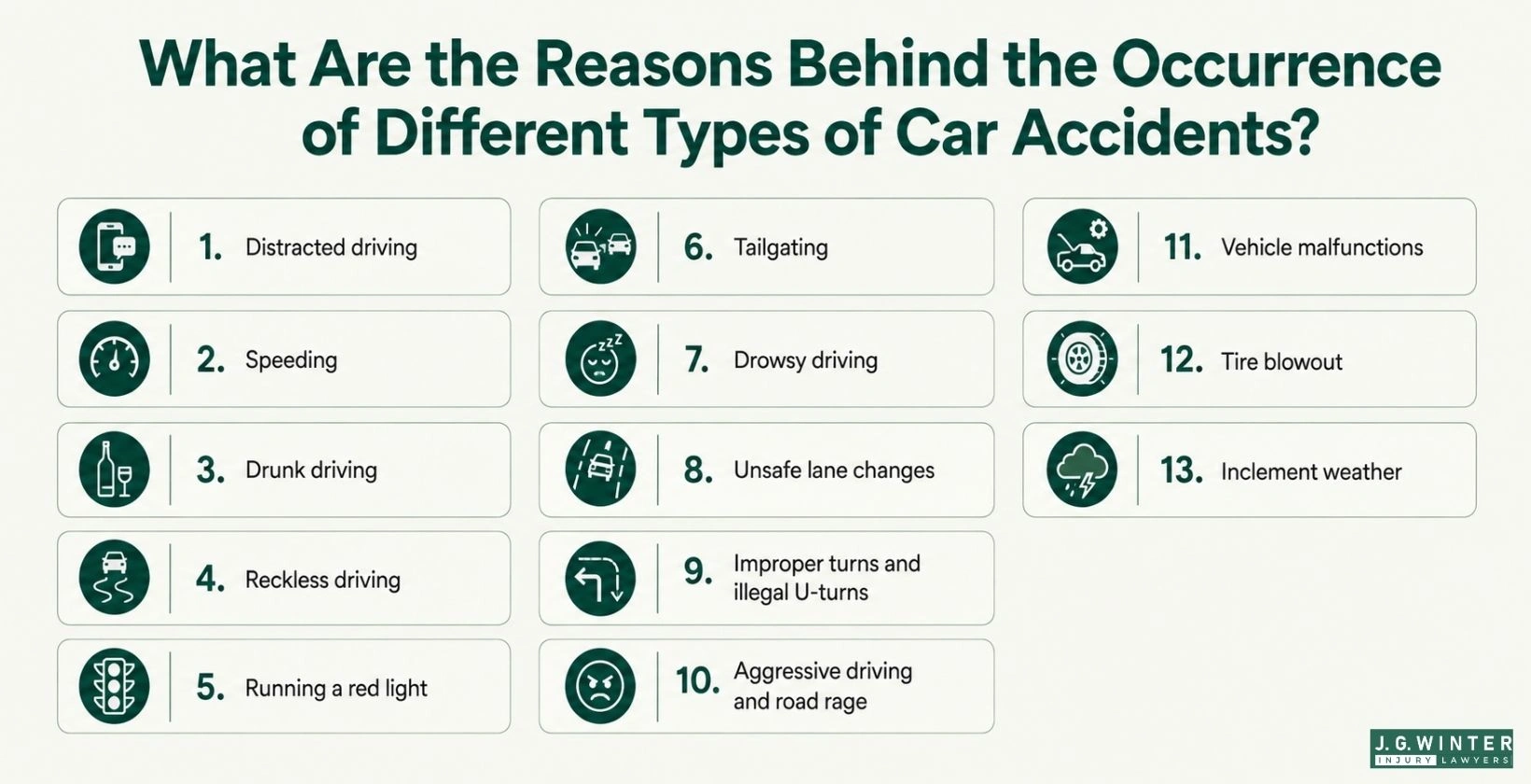
What Are the Reasons Behind the Occurrence of Different Types of Car Accidents?
While you can’t prevent every car accident, you can avoid many. Regarding car crashes, some causes are more common than others. Here’s a list of the main causes of car accidents. Knowing these causes might help you stay out of a collision.
- Distracted driving: Texting takes a driver’s eyes, hands, and mind off the road at once, killing 3,275 people in U.S. crashes in 2023 (NHTSA), and a driver who violated California’s handheld phone ban under Vehicle Code Section 23123.5 has already supplied strong evidence of negligence for your claim.
- Speeding: Speeding caused 29 percent of all U.S. traffic deaths in 2024 (NHTSA), and because the Basic Speed Law under Section 22350 requires driving no faster than conditions allow, a driver can be at fault even below the posted limit.
- Drunk driving: Alcohol slows reaction time and judgment, and a DUI violation under Section 23152 is strong evidence of negligence that can also support punitive damages in your claim.
- Reckless driving: Driving with willful disregard for safety is a criminal offense under Section 23103, and the citation is strong evidence of negligence that can also support punitive damages in your claim.
- Running a red light: A red light runner crosses against traffic at full speed and causes severe T-bone crashes, and a documented violation of Section 21453 usually settles fault on its own.
- Tailgating: Following too closely leaves no room to stop and violates Section 21703, which is why the rear driver in a rear-end crash starts out presumed at fault.
- Drowsy driving: Fatigue impairs a driver much like alcohol, and although no statute names it, a driver who dozed off at the wheel is negligent and their work schedules and phone records become the proof.
- Unsafe lane changes: A driver who changes lanes without checking the blind spot or signaling for the last 100 feet violates Sections 22107 and 22108, and the missing signal often decides a sideswipe claim.
- Improper turns and illegal U-turns: U-turns are restricted in business districts, residential areas, near fire stations, and anywhere without 200 feet of clear view under Sections 22102 through 22105, so fault typically lands on the turning driver.
- Aggressive driving and road rage: Aggressive driving is a traffic offense that supports an ordinary negligence claim, while road rage is intentional criminal conduct that can also support punitive damages, and your civil claim proceeds whether or not prosecutors ever file charges.
- Vehicle malfunctions: Brake or steering failures take control away from even a careful driver, and when a defect caused the crash, liability shifts to the manufacturer or repair shop, so the unrepaired vehicle becomes the key evidence in your claim.
- Tire blowout: A sudden blowout can throw a vehicle across lanes, especially a semi-truck, and fault lands on the driver, the tire maker, or the trucking company depending on whether the cause was worn tread, a defect, or skipped inspections.
- Inclement weather: Rain, fog, and ice reduce visibility and traction but never excuse a crash, because the Basic Speed Law requires slowing to match conditions, so a driver who crashed in bad weather was usually driving too fast for it.
What Are the Most Common Injuries From an Auto Accident?
When an accident happens, your first steps are to make sure the victim is okay, evaluate the situation, and call for an ambulance. Car accidents may result in injuries that cause long-lasting physical and mental harm, sometimes lasting for years or even a lifetime. Here are some of the common injuries that occur after car accidents.
- Whiplash or neck injuries
- Facial injuries
- Back and spinal cord injuries
- Head and brain injuries
- Soft tissue injuries
- Broken bones and fractures
Whiplash deserves special attention because insurers dispute it most. Symptoms typically appear within 24 hours of the crash, and sometimes later, which is why insurers discount claims from victims who skipped a same-day medical exam. Watch for neck pain and stiffness, headaches that worsen with movement, dizziness, shoulder or back pain, tingling or numbness in the arms (a sign of nerve involvement), fatigue and sleep problems, blurred vision, and trouble with memory or concentration.
The psychological toll is documented and compensable. Research on motor vehicle crash survivors finds that 21% to 67% experience depressive moods, up to 47% develop elevated anxiety or a driving phobia, and 20% to 40% suffer post-traumatic stress disorder. Treatment records for these conditions belong in an injury claim just as much as X-rays and surgical bills.
How to Prevent a Car Accident?
Many accidents can be prevented if rules and regulations are followed. One key way for drivers to lower the chance of car accidents is by adopting safe driving habits. Here are some ways to prevent car accidents:
- Follow traffic rules and regulations
- Keep a safe driving distance
- Keep your vehicle in good condition
- Look both ways in an intersection
- Avoid driving under the influence
- Stay under the speed limit
- Stay alert on the road and avoid using phones
- Avoid driving for a long time
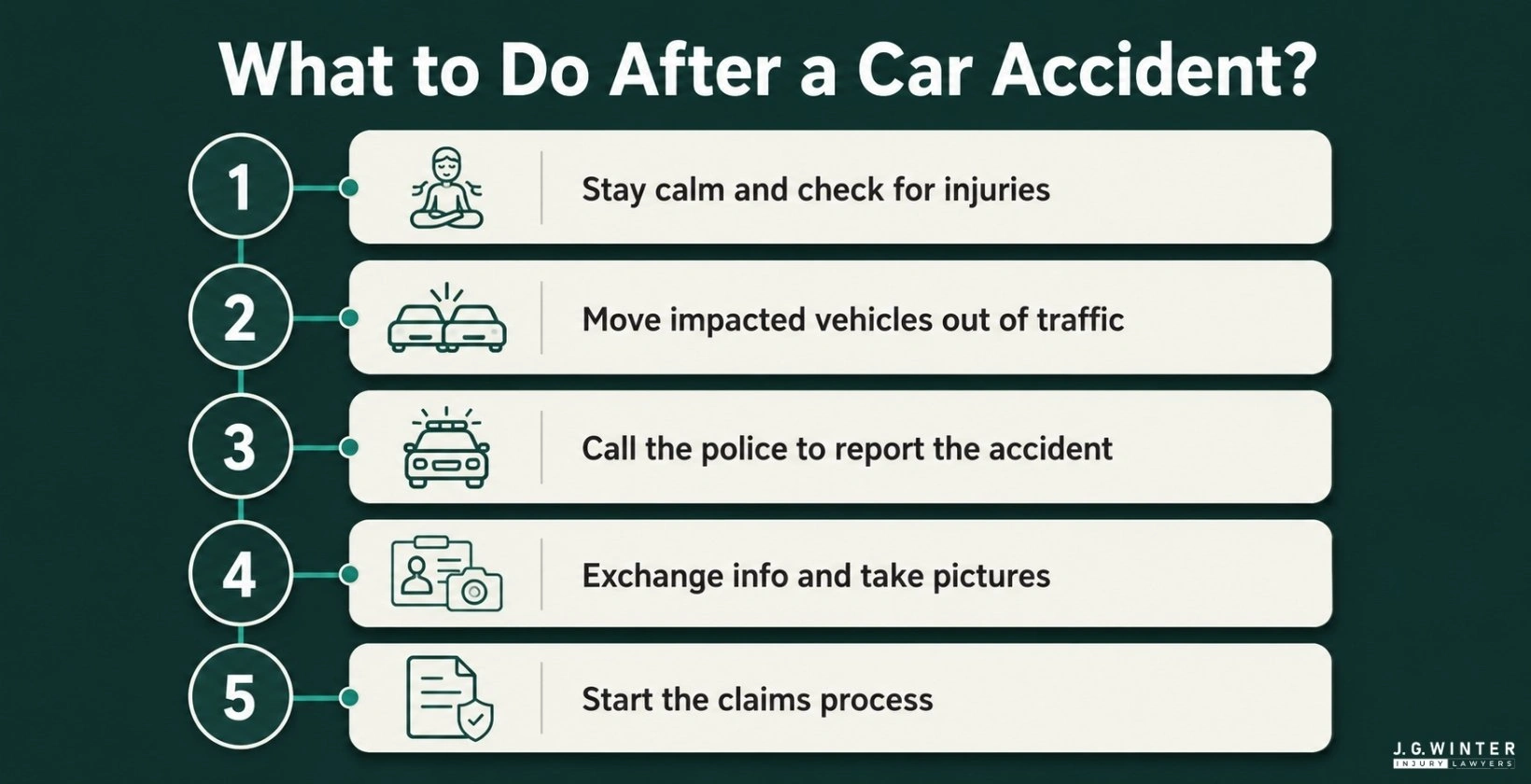
What to Do After a Car Accident?
If you’re involved in a wreck, you should follow these immediate steps after a car accident:
Stay calm and check for injuries: Ensure you and your passengers are safe and free from injuries. If another vehicle is in the accident, check to see if the driver and their passengers are okay. Accidents can be stressful, but staying calm and composed will help you take control of the situation.
Move impacted vehicles out of traffic: If your car can still be driven, move it to the roadside or a safe spot away from traffic, but stay at the accident site. Use your hazard lights and consider setting up road flares to alert oncoming traffic.
Call the police to report the accident: Call 911 and wait for the police to come. Cooperate with the police officer by answering their questions so they can create a police report and give them your driver’s license and insurance details. Ask for the names and badge numbers of all the officers you interact with, and request a copy of the police report for your insurance company.
Exchange info and take pictures: While the police report is an official record of the accident, it’s a good idea to take photos of the damage to your vehicle and any other involved vehicles as part of your car accident checklist. Capture images from different angles to clearly show where the impact happened. Make sure to obtain the other driver’s name, address, phone number, and insurance information, plus car makes and models, driver’s license numbers, and license plate numbers. If there are witnesses present, politely ask for their contact information.
Start the claims process: No matter who’s responsible for the accident, it’s a wise move to let your car insurance company know that there was an accident. It’s up to you whether you want to file a claim with your own insurer or with the other driver’s insurer, and it’s even possible to file a car insurance claim without having a police report. Typically, your insurer will only require some essential details about the accident to start a claim, including any photos you snapped of the damage. They will assign a claims representative to assist you throughout the claims process.
Were You in One of These Accidents in Sacramento, CA?
You now know what kind of crash you were in. That matters more than most people realize, because each type comes with its own proof: camera footage for an intersection T-bone, skid mark analysis for a rear-end, vehicle preservation for a rollover. Most of that evidence disappears within days or weeks, long before the insurance company makes its first offer.
Attorney Jeremy G. Winter has spent nearly 20 years securing that evidence for crash victims as a personal injury lawyer in Sacramento, California, and he knows which proof wins which type of case. When you call, you talk through what happened; he tells you honestly whether you have a claim and what it may be worth, and you decide what to do next. No pressure, no upfront cost, and no fee at all unless your case recovers money.
Tell us what type of accident you were in. Call us any day, any hour.
FAQs About Car Accidents
Generally, 2 years from the date of the accident for personal injury. However, if the accident involved a government vehicle (like a city bus or police car), you must file a formal claim within 6 months.
Property damage: You actually have up to 3 years to sue for vehicle damage alone.
Minors: If a child is injured, the 2-year clock typically doesn’t start until they turn 18. One critical exception: this tolling does not apply to claims against government entities. A child hit by a city bus or other public vehicle is still bound by the 6-month government claim deadline, so act immediately in those cases.
Yes. California follows “pure comparative negligence.” This means you can be 99% at fault and still recover 1% of your damages.
Example: If your total damages are $100,000 but you are found 40% responsible, you would still receive $60,000.
Safety organizations like the NHTSA and IIHS put every new vehicle through four primary “crashworthiness” tests to determine safety ratings:
1. Frontal overlap: Simulates a head-on collision or hitting a tree; tests how well the “crumple zone” protects the cabin.
2. Side barrier (T-bone): A heavy sled strikes the side of the car to test door strength and side-curtain airbags.
3. Side pole: The vehicle is slid sideways into a rigid pole; this is the most rigorous test for head and spine protection.
4. Roof crush/rollover: Measures how much weight the roof can support before collapsing, which is critical for survival in a rollover.
You use your Uninsured Motorist (UM) coverage. California law requires insurers to offer UM coverage with limits matching your bodily injury liability limits, though they are not required to offer more than $30,000 per person and $60,000 per accident. You can also reject UM coverage entirely in writing, so check your policy declarations page to confirm what you carry. If you have it, your own insurance company effectively “steps into the shoes” of the at-fault driver to pay your claim.
Very rarely. About 95% of cases settle out of court. A trial usually only happens if the insurance company disputes who was at fault or refuses to acknowledge the severity of a life-altering injury.
The time taken to settle a car accident case depends on many factors. Some cases may settle within weeks, and some may even take years.
Yes, hiring a car accident lawyer in California after an accident is worth it. If the damage incurred during the accident is severe, an expert lawyer will be handy.
Yes, in most injury cases. California requires an SR-1 report to the DMV within 10 days if anyone was injured or killed, or if property damage exceeds $1,000. This applies regardless of fault and is separate from the police report and your insurance claim.
Yes. Criminal charges and civil injury claims run on separate tracks with different standards of proof. A prosecutor must prove guilt beyond a reasonable doubt; your civil claim only needs to show it is more likely than not that the driver’s conduct caused your injuries.